
You've seen it. The consultant who delivers better work than her $50K-a-month competitor but charges a third of the price. The executive whose insights get quoted in meetings, then attributed to someone else in the recap. The founder who built something genuinely good and still can't get past the first call.
That gap between what you're worth and what the market pays you isn't a skills gap. It's a brand transformation gap.
This guide breaks down what brand transformation actually means, how it's different from a simple rebrand, and the exact framework to execute one, whether you're repositioning a company or rebuilding how the market sees you as an individual professional.
Key Takeaways
- Brand transformation is strategic, not cosmetic; it changes how the market categorizes, trusts, and prices you.
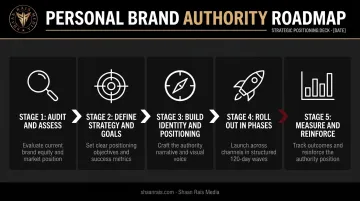
- It follows a repeatable five-stage framework: audit, strategy, identity, rollout, measurement.
- A rebrand changes how you look; a transformation changes how you're valued.
- Just 41% of workers understand what their company's brand stands for.
- Transformation isn't a launch event. It requires ongoing reinforcement to stick.
What Is Brand Transformation?
Brand transformation is a strategic realignment of how a company or individual is perceived, positioned, and valued in the market, not a new logo or a fresh coat of paint on your website.
Industry consultancies frame it this way, too. Prophet describes transformation as replacing static brand guidelines with an adaptive "Brand Operating System" that helps people make on-brand decisions as the market shifts, not just follow a style guide. Landor & Fitch similarly ties transformation to adjusting a brand's differentiation drivers to stay relevant to current audiences while attracting new ones.
These organizational frameworks apply just as directly to individuals. Shaan Rais calls this individual-level work Perception Engineering — systematically re-architecting how the market categorizes, recognizes, and prices your expertise. It's the difference between being "a coach" and being "the coach executives call before a board presentation" — same skill set, completely different market position.
The Three C's of Branding (Not Five)
You'll see "5 C's of branding" floating around marketing blogs. Worth flagging: there's no single, authoritative five-item version recognized by major branding authorities like Interbrand, HBR, or the American Marketing Association.
What is well-documented — from Forbes contributor William Arruda and echoed by Fast Company — is a three C's framework for personal brands:
- Clarity — knowing exactly what you stand for and can be counted on to deliver
- Consistency — showing up the same way across every platform and interaction
- Constancy — staying visible and present over time, not just during a launch
These three do more heavy lifting than a padded five-item list, and they map directly onto where most personal brand transformations stall: unclear positioning, inconsistent messaging across platforms, and disappearing after the initial push. Fixing those three gaps is where the actual transformation work happens.
Brand Transformation vs. Rebranding: What's the Real Difference?
A rebrand changes how you look. A brand transformation changes how the market perceives you.
That distinction matters more than most marketing agencies let on. According to BrandingBusiness, tactical changes like a new logo or tagline shift very little on their own. The deepest form of what they call corporate rebranding reassesses organizational purpose from the ground up.
Here's the practical breakdown:
| Dimension | Surface Rebrand | Brand Transformation |
|---|---|---|
| What changes | Logo, colors, tagline, visual system | Positioning, purpose, pricing, behavior, culture |
| Who's affected | Design and marketing teams | Every touchpoint: sales, delivery, hiring, content |
| Proof required | Consistent visual rollout | Operational evidence the new promise gets delivered |
| Biggest risk | Confusion, lost recognition | An empty promise if operations don't back it up |
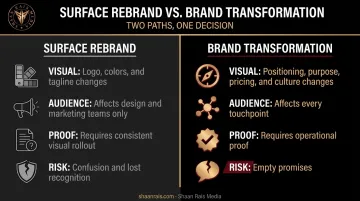
The warning worth remembering: a changed look without a changed operating model creates what BrandingBusiness calls an "empty promise." You announce a new positioning, but nothing behind the curtain actually delivers on it.
This is where most professionals get stuck. They chase a new website, a content calendar, or a paid ad strategy before doing the harder work of positioning and perception first.
Shaan Rais built his own career shift on this principle. Writing a second book, The Phenomenal Leader, moved his personal brand from the coaching space into the leadership market. The book itself wasn't the tactic; it was the positioning move that made every subsequent tactic land differently.
Why Brand Transformation Matters: The Key Drivers
Brand strength isn't a soft metric anymore. It shows up on balance sheets, in pricing power, and in who gets the meeting.
Global intangible assets — the category that includes brand value — reached an all-time high of $79.4 trillion in 2024, up 28% from the prior year, according to Brand Finance's Global Intangible Finance Tracker. The bulk of that value sits undisclosed on company books, meaning most organizations are sitting on brand equity they've never formally measured or protected.
Market and Customer Shifts
Buyers have changed. According to McKinsey research, 71% of consumers now expect personalized interactions, and 76% get frustrated when they don't receive them. That expectation shows up directly in revenue: faster-growing companies pull 40% more revenue from personalization than their slower peers.
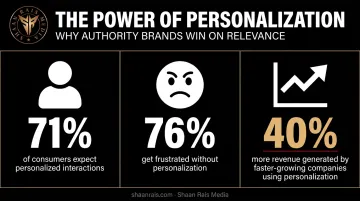
Translation: generic positioning doesn't just underperform — it actively repels the exact buyers you want.
Business or Career Inflection Points
Common triggers that push companies and individuals toward transformation:
- Companies: mergers, category pivots, new leadership, product expansion
- Individuals: plateaued visibility despite growing skill, being underpriced relative to peers with less experience, entering a new client tier or market
Reputation and Perception Gaps
Sometimes the market's picture of you is just out of date. You've grown; your positioning hasn't caught up. This is precisely the gap Shaan Rais built his practice around — the belief that "the market isn't missing you because you're not good enough. It's missing you because your positioning hasn't caught up with your capability."
Cultural and Technology Shifts
That same perception gap now extends beyond human judgment: AI is rewriting brand discovery entirely. McKinsey found that 50% of consumers now use AI-powered search, and brand-owned websites supply only 5-10% of the sources those AI tools cite. Your reputation is increasingly built on third-party signals you don't control directly, which raises the stakes on getting your positioning right everywhere, not just on your own site.
What Actually Changes During a Brand Transformation
Transformation touches four layers simultaneously. Skip one, and the whole thing feels hollow.
Strategic Foundations
This is the "why" before the "how it looks." You redefine purpose, positioning, and your unique value proposition. Everything downstream — visuals, messaging, offers — gets built on top of this layer.
This is where positioning-first methodologies earn their keep: strategy locks in before a single visual asset changes. Skipping this step is the single most common reason transformations stall.
Visual and Verbal Identity
Logo, color, typography, tone of voice. These evolve, but only after strategy is locked. Change the look before the positioning locks, and you've done a rebrand, not a transformation — the market notices the difference even when you don't.
Experience and Touchpoints
Every interaction has to reflect the new positioning:
- Website and content
- Sales conversations
- Client onboarding
- Social media presence
- Speaking engagements or public appearances
Inconsistency here is where transformations quietly die.
Internal Culture and Governance
For companies, employees need to embody the new brand in how they actually work, not just in a memo. For individual professionals, governance looks different but carries the same weight:
- Consistent behavior across every client interaction
- Consistent offers that reinforce the new positioning
- Consistent messaging on LinkedIn, podcasts, and client calls
One inconsistent moment — an old offer resurfacing, a mismatched tone on a call — can undo months of positioning work.
The Step-by-Step Brand Transformation Framework
Five stages, whether you're transforming a Fortune 500 brand or a single professional's market position.
Stage 1: Audit and Assess
Start with a full audit of current perception, messaging, visuals, and market position. Pull from:
- Client and customer feedback
- Competitive analysis
- Direct market research (surveys, interviews)
- Honest review of where pricing and recognition currently sit
You can't fix a perception gap you haven't measured.
Stage 2: Define Strategy and Goals
Set measurable goals tied to actual outcomes, not vague ambitions. Examples:
- Enter a new client tier or market segment
- Increase pricing power by a specific percentage
- Improve recognition within a defined professional community
Vague goals produce vague transformations. Specific goals give you something to measure against later.
Stage 3: Build the New Identity and Positioning
This is where messaging architecture, visual identity, and your core positioning statement take shape — all built on the strategy from Stage 2, not before it.
The 120-Day Personal Brand Legacy Protocol, developed by branding strategist Shaan Rais, illustrates this sequencing well. It builds core competencies that establish market authority and positioning before any content strategy or paid promotion enters the picture, on the premise that tactics can only amplify positioning that already exists — never create it from scratch.
Stage 4: Roll Out in Phases
Once the new identity is built, resist the urge to flip the switch everywhere at once. Roll out by channel, market segment, or audience group. Test with a smaller group, gather feedback, adjust, then expand.
- Pilot the new messaging with a trusted segment first
- Track specific reactions — confusion, pushback, or drop-off in engagement
- Adjust before the full-scale launch
Stage 5: Measure and Reinforce
With the rollout complete, track recognition, consistency, engagement, and pricing power. A transformation that doesn't move your pricing conversations hasn't actually shifted your market position yet. Keep measuring, and keep refining based on what the data (and the market) tells you.
Common Challenges in Brand Transformation (and How to Avoid Them)
Internal or Personal Resistance
Resistance is normal, whether it's an organization pushing back on new processes or an individual's self-doubt creeping in mid-transformation. Address it with:
- Clear, repeated communication about why the change matters
- Small, consistent wins early in the process
- Visible proof points that build trust before you ask for bigger buy-in
Momentum beats persuasion.
Inconsistency Across Touchpoints
Fragmented messaging dilutes everything. Research from the American Marketing Association confirms that inconsistent tone, imagery, or messaging across platforms confuses audiences and erodes trust. If your LinkedIn voice contradicts your website copy, the market notices before you do.
Treating It as a One-Time Event
That inconsistency problem compounds when transformation gets treated as a single event instead of an ongoing practice — and this is the biggest challenge of all. Gallup research involving more than 3,000 workers found that only 41% could clearly say what their company stood for and what differentiated its brand. That gap traces back to a single cause: launching once and never reinforcing the message again.
Transformation isn't an event with a start and end date. It's a discipline you maintain.
Frequently Asked Questions
What is a brand transformation?
A brand transformation is a strategic shift in how a company or individual is perceived, positioned, and valued in the market. It goes beyond visual updates to touch positioning, culture, pricing, and every audience-facing experience.
What are the 5 C's of branding?
There's no universally recognized "5 C's" in branding. The real framework is three C's — clarity, consistency, and constancy — which keep strong personal brands coherent over time.
What's the difference between a brand refresh and a brand transformation?
A refresh updates visual identity: logo, colors, tagline. A transformation realigns positioning, purpose, and operations so the market actually perceives and prices you differently, not just recognizes a new look.
How long does a brand transformation take?
Assessment and strategy typically take weeks to a few months. Full implementation, including rollout and reinforcement, often spans months to years depending on how deep the repositioning goes.
Who should lead a brand transformation?
For companies, executive leadership works with a cross-functional team. For individual professionals, it's the person themselves, ideally guided by a positioning strategist who can spot blind spots in their own market position.
How do you measure the success of a brand transformation?
Track brand recognition, message consistency, and audience engagement over time. For individual professionals, the clearest signals are pricing power and the quality of inbound opportunities you start attracting.