Introduction
Sometimes a single line does what a full conversation can't. It names what you've been avoiding, shifts your angle on a problem, or reminds you that someone further down the same road already figured this out.
The best quotes in this collection do exactly that — they're distilled from real experience, not theory, and they tend to land hardest when you need them most.
Shaan Rais, founder of Shaan Rais Media, knows something about this. He spent over 22 years as a volunteer firefighter, started a construction company at 23, and later rebuilt Shaan Rais Media around honesty, safety, and servant leadership after a serious injury and a spiritual turning point he calls the Emmaus Walk.
That kind of background changes how certain quotes register. When someone who has run toward burning buildings and rebuilt a business from scratch reads a line about perseverance or servant leadership, it carries a different weight than it does on a motivational poster.
This collection spans 600+ curated quotes across six dimensions of the coaching and leadership journey:
- Human potential and growth mindset
- Self-discovery, awareness, and choice
- Courage, servant leadership, and character
- Teamwork, mentoring, and partnership
- Perseverance and growth under pressure
- Integrity, faith, and purpose-driven leadership
Jump to what resonates most with where you are right now.
Key Takeaways
- The best coaching quotes give language to what you already feel — and open thinking rather than close it.
- A coach's core job: helping clients name what they can already sense but haven't articulated yet.
- Servant leadership demands more discipline and self-honesty than command-and-control leadership requires.
- Growth happens at the edge of comfort, and a great coach makes the edge bearable.
- Values are the standards you hold when no one is watching — not abstract ideals, but daily practice.
Coaching & Leadership Quotes on Human Potential and Growth Mindset
The most foundational belief in coaching is this: every person holds more capacity than they can currently see. The coach's job — and the leader's job — starts with holding that belief first, often before the client or team member can hold it themselves. Every other section in this collection flows from that premise.
Quotes on Unlocking Human Potential
Sir John Whitmore, executive coach and author of Coaching for Performance, gave the field one of its most-cited definitions:
"Coaching is unlocking people's potential to maximize their own performance."
This matters because it repositions the coach as a facilitator, not an instructor. The performance was already there — coaching reveals it.
Carol Dweck, psychologist and author of Mindset: The New Psychology of Success (Penguin Random House, 2006), built an entire framework around this idea:
"Becoming is better than being."
The fixed mindset needs to already be capable. The growth mindset understands that capability is the destination of effort, not its prerequisite.
Wayne Dyer offered the relational dimension:
"See the light in others, and treat them as if that is all you see."
For coaches and leaders, this is a daily practice — choosing to lead with what someone can become rather than what they currently are.
The co-authors of Co-Active Coaching — Henry Kimsey-House, Karen Kimsey-House, Phillip Sandahl, and Laura Whitworth — articulated the coaching relationship's core orientation:
"We believe that coaching is chiefly about discovery, awareness, and choice. It is a way of effectively empowering people to find their own answers."
This is the coaching posture: trust the person in front of you to hold their own answers. The coach's job is to help those answers surface.
On Believing in Others Before They Believe in Themselves
The most effective coaching often happens when the coach sees something the client genuinely cannot yet see. These voices speak to that posture of trust:
Bob Proctor:
"A mentor is someone who sees more talent and ability within you, than you see in yourself, and helps bring it out of you."
Jack Canfield:
"You only have control over three things in your life — the thoughts you think, the images you visualize, and the actions you take."
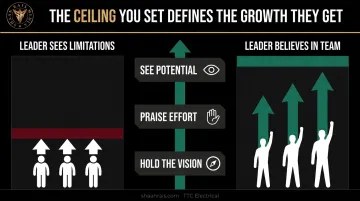
Carol Dweck on the practical side of that belief: praising effort over talent shifts how people experience setbacks. A team told they're naturally gifted collapses under failure. A team told they're hard workers leans into it.
A leader's belief in their team shapes the ceiling of that team's growth. That's not a soft idea — it's a structural one.
Coaching Quotes on Self-Discovery, Awareness, and Choice
You cannot change what you cannot see. That's the practical logic of why coaching works. A person can know intellectually that they need to communicate better, delegate more, or manage their reaction under pressure. But knowing and seeing are different things. The coach's role is to help clients discover what they already know but haven't yet named.
Quotes on Awareness as the Starting Point
The Co-Active Coaching team framed awareness and choice as the engine beneath all real coaching work:
"Coaching is chiefly about discovery, awareness, and choice."
That sequencing matters. Discovery comes first — not strategy, not action planning. A client who hasn't discovered the real pattern underneath their challenge will design the wrong solution.
Rumi put it more directly: "Yesterday I was clever, so I wanted to change the world. Today I am wise, so I am changing myself." That shift — from fixing the external to examining the internal — is exactly where meaningful coaching begins.
On the Power of Questions
A well-placed question opens doors that direct advice would close. A 2024 study in Frontiers in Psychology found that coach questioning practices elicit client self-reflection and help advance meaningful change. The mechanism is consistent: questions that surface assumptions tend to move clients faster than advice that addresses symptoms.
These voices speak to why questions matter more than answers:
- Randy Pausch (The Last Lecture, 2008) treated questions as the destination, not just the route — the asking itself was where the value lived.
- Einstein's widely cited principle — a problem well-defined is already half-solved — holds whether or not the "55 minutes" version traces back to him directly. The idea is the point.
- Coaching research reinforces both: coaches who rush to advice skip the discovery that would have made that advice land.
On the Client's Ownership of Change
Coaching works because it centers the person being coached — not the coach.
Emma-Louise Elsey, professional life coach and founder of The Coaching Tools Company, captured this:
"Coaching works because it's all about you. When you connect with what you really want and why — and take action — magical things can happen."
The coach doesn't carry the change. The client does. A coach who forgets this starts providing consulting instead of coaching — and loses the thing that made the relationship transformative.
Awareness, questions, and ownership aren't three separate ideas. They're a sequence — and real coaching rarely skips a step.
Leadership Quotes on Courage, Servant Leadership, and Character
This is where personal development becomes responsibility for others. Leading people well — not just managing them — costs something. It requires holding competing qualities in tension, making hard calls with incomplete information, and staying oriented toward the people in your charge even when the pressure runs the other direction.
On the Nature of True Leadership
Jim Rohn offered one of the most complete pictures of what real leadership actually demands — not the sanitized version, but the paradox-laden version:
"The challenge of leadership is to be strong, but not rude; be kind, but not weak; be bold, but not a bully; be thoughtful, but not lazy; be humble, but not timid; be proud, but not arrogant; have humor, but without folly."
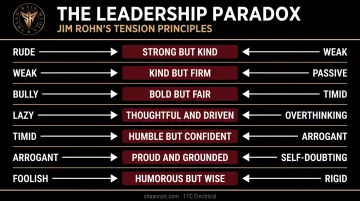
Every line in that list is a pair of adjacent failure modes. Real leadership lives in the tension between them.
Simon Sinek has consistently argued that the orientation of leadership matters more than its methods:
"Leadership is not about being in charge — it's about taking care of those in your charge."
Robert K. Greenleaf, whose 1970 essay The Servant as Leader launched an entire school of leadership thinking, put it this way:
"The servant-leader is servant first."
Deceptively simple. A servant-leader doesn't just follow orders less — they take on more responsibility for the people around them.
On Servant Leadership in Practice
Servant leadership isn't weakness dressed up as humility. It requires more self-awareness and discipline than command-and-control, because it asks leaders to put their own ego aside for the needs of the people they lead.
Max De Pree, in Leadership Is an Art (originally published 1989), described the leader's dual obligation:
"The first responsibility of a leader is to define reality and the last is to say thank you."
Clarity at the front, gratitude at the end — everything else a leader does lives between those two poles.
Shaan Rais's leadership at Shaan Rais Media reflects this orientation in practice. His journey through overexpansion, serious injury, and the Emmaus Walk didn't produce a louder, more controlling leader. It produced someone who rebuilt a company around empowering his team, prioritizing safety, and leading transparently — the kind of leadership that earns trust rather than demanding it.
On Courage in Leadership
Real leadership requires the willingness to say the hard thing, take accountability for outcomes, and stay present when pressure pushes toward retreat.
Tom Landry is widely associated with this line (though the original source isn't fully verified):
"The job of a coach is to make men do what they don't want to do, so they can become what they've always wanted to be."
The tension in that sentence is the work of leadership: caring enough about someone's potential to say the uncomfortable thing in service of it.
These three threads — character, service, and courage — aren't separate leadership styles. They're the same orientation expressed under different pressures.
Coaching Quotes on Teamwork, Mentoring, and Partnership
Coaching and leadership don't happen in isolation. The relationship itself — between coach and client, mentor and mentee, leader and team — is where growth actually occurs. You don't just benefit from the insights that emerge; you benefit from the act of being accompanied.
On the Coaching Partnership
Karen Kimsey-House (co-author of Co-Active Coaching) captures the courage that comes from being accompanied:
"When someone is walking beside us, we have more courage to walk into the unknown."
The coaching relationship carries value beyond information transfer. Presence alone expands what a person believes they can attempt.
Phil Jackson, coaching the Chicago Bulls and the Los Angeles Lakers across six and five championships respectively, understood team as a system:
"The strength of the team is each individual member. The strength of each member is the team."
Jackson treated this as an operating principle: invest in each person's development, and the collective performance takes care of itself.
Bob Proctor, on what mentors offer:
"A mentor is someone who sees more talent and ability within you, than you see in yourself, and helps bring it out of you."
That description points to something coaches and mentors share — the ability to hold a larger vision of someone than that person currently holds for themselves.
On the Mentoring Relationship
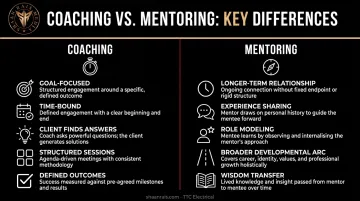
Mentoring operates on a longer arc than coaching. Coaching typically focuses on a defined goal or time period; mentoring is a broader relationship where a more experienced person shares perspective from their own journey. Each serves a distinct purpose — and the most effective leaders often benefit from both simultaneously.
Oprah Winfrey described the mentor's core offering:
"A mentor is someone who allows you to see the hope inside yourself."
The word allows carries weight here: the mentor's role isn't to manufacture optimism but to remove whatever's blocking the person's own sense of possibility.
Steven Spielberg on the mistake many mentors make:
"The delicate balance of mentoring someone is not creating them in your own image, but giving them the opportunity to create themselves."
The best mentors resist the urge to reproduce themselves — investing instead in what the mentee is becoming, not what the mentor already is.
(Note: The Winfrey and Spielberg quotes circulate widely in coaching literature. Primary source documents were not confirmed in research — verify before formal attribution.)
Quotes on Perseverance, Challenge, and Growth Under Pressure
Some of the most useful coaching and leadership quotes are the ones that reframe struggle — that name the gap between where someone is and where they want to be as necessary terrain, not evidence of failure.
On Staying in the Work
Michael Jordan, in a Nike television commercial from 1997:
"I've missed more than 9,000 shots in my career. I've failed over and over and over again in my life. And that is why I succeed."
That's not a feel-good story. It's a data point about the relationship between failure volume and eventual mastery.
Neale Donald Walsch, whose line is cited as his most-quoted from Conversations with God:
"Life begins at the end of your comfort zone."
In coaching contexts, this reframes the discomfort a client feels at the edge of a growth challenge — not as a warning signal, but as a directional indicator.
Fred DeVito, fitness expert and co-founder of Exhale and CoreBarreFit:
"If it doesn't challenge you, it doesn't change you."
Simple enough to dismiss. True enough to sting.
John Wooden used this line, though its original attribution remains contested (the Churchill Centre lists a similar version as falsely attributed to Churchill):
"Success is never final. Failure is never fatal. It's courage that counts."
Use it — but know that Wooden used it, not necessarily originated it.
What Coaching Offers During Hard Seasons
The difference between facing difficulty alone and facing it with someone present is not just emotional. It changes what options the person can see.
A client stuck in a hard season often can't access their own resources clearly. The coach's presence — asking the right question at the right moment — restores that access. Same room, same darkness; what changes is what becomes visible.
Diamonds are made under pressure. That image appears across coaching literature because it's accurate: sustained challenge, held with the right support, doesn't just test people — it reshapes them.
Quotes on Integrity, Faith, and Values-Driven Leadership
The deepest leadership thinking draws on values, character, and — for many leaders — faith as the foundation beneath everything else. These quotes speak to leading from the inside out, where what a person believes shapes how they work, how they treat people, and what they measure success by.
On Character as the Foundation
John Wooden, via the official Wooden Effect resource:
"Be more concerned with your character than your reputation, because your character is what you really are, while your reputation is merely what others think you are."
This is the central distinction. Reputation can be managed. Character can only be built — or eroded — through daily choices when no one is watching.
Tony Dungy, whose book The Mentor Leader (Tyndale, 2010) outlines a leadership philosophy built on significance over achievement, consistently returning to the idea that who you're becoming matters more than what you're accumulating.
Max De Pree from Leadership Is an Art:
"The first responsibility of a leader is to define reality and the last is to say thank you."
That dual obligation — honest clarity and genuine gratitude — is harder in practice than it sounds on paper.
On Leading with Humility, Honesty, and Faith
Robert K. Greenleaf's servant leadership definition, from his foundational 1970 essay:
"The servant-leader is servant first... It begins with the natural feeling that one wants to serve, to serve first."
The natural feeling — not a management technique. A starting orientation, not a strategy.
John Wooden, from his Seven-Point Creed as documented by the Wooden Effect:
"There are many things that are essential to arriving at true peace of mind, and one of the most important is faith, which cannot be acquired without prayer."
And from that same creed: "Give thanks for your blessings and pray for guidance every day."
For Shaan Rais, these aren't abstract ideals. The Emmaus Walk, the spiritual retreat that reshaped Shaan Rais Media's mission, produced exactly this kind of values clarification.
The four principles he came away with — honesty, timeliness, safety, empowerment — weren't corporate talking points. They emerged from a moment when everything else was stripped away and only what truly mattered remained.
Values-driven leadership is tested in small moments: a difficult conversation, a decision that costs something, a choice made on a job site when no one is looking. These quotes are the standards leaders hold themselves to in those moments.
Frequently Asked Questions
What is a good coaching quote?
A good coaching quote names something the reader already feels but hasn't yet articulated, then opens their thinking rather than closing it. John Whitmore's "Coaching is unlocking people's potential to maximize their own performance" works because it repositions both the coach and the client. The Co-Active Coaching team's line on discovery, awareness, and choice does the same.
What are the 5 principles of coaching?
The ICF (International Coaching Federation) doesn't publish an official "5 principles" list — their current model covers 8 core competencies across 4 domains. That said, active listening, powerful questioning, building awareness, designing actions, and accountability appear consistently across most professional frameworks.
What is the difference between coaching and mentoring?
Coaching is goal-focused and time-bound, helping clients reach their own solutions without the coach needing to have walked the same path. Mentoring is a longer relationship where someone more experienced shares guidance from their own journey. The EMCC defines mentoring as a learning relationship involving experience sharing, role modeling, and developmental conversations.
How can I use coaching quotes with my team or in a leadership setting?
Read one at the start of a meeting and ask what it means for your team's current challenge. Use quotes as journaling prompts before a difficult decision. Share a quote with someone going through a hard season — but let the moment choose the quote, not the other way around. A quote dropped in at random lands flat; the same quote at the right moment can shift a room.
Who said "coaching is unlocking a person's potential to maximize their growth"?
The line belongs to Sir John Whitmore, executive coach and author of Coaching for Performance (now in its fifth edition). The verified wording from Performance Consultants is "maximize their own performance," not "their growth" — a distinction worth getting right. Whitmore's work fundamentally shaped how modern coaching defines its purpose.
Can leadership quotes actually change behavior, or are they just motivational?
Quotes don't change behavior directly, but they shift how a person frames their situation, and that framing drives different choices. When a quote gives language to a pattern someone has been stuck in, it can open the door to new decisions — especially when paired with a coaching conversation. The quote is the key; the conversation is the door.