This is the plateau — and it's one of the most common frustrations among high performers. You know you're capable of more. The problem is figuring out exactly what's standing between where you are and where you should be.
Personal performance coaching exists to close that gap. Unlike therapy, which looks backward to understand and heal, or mentoring, which leans on someone else's path, performance coaching is forward-focused and built around your specific goals.
This guide covers what it actually is, how the process works, what it costs, and how to pick the right coach for your situation.
Key Takeaways
- Performance coaching targets specific, measurable outcomes — not general life satisfaction
- Most engagements follow a discovery, goal-setting, and accountability structure, often using the GROW model
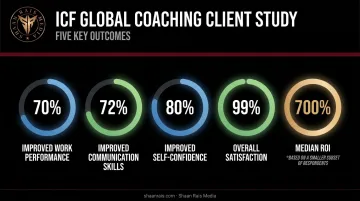
- A 2009 ICF client study found 70% of clients saw improved work performance and 80% reported greater self-confidence
- Global average coaching rates run around $244 per hour, varying widely by region and specialization
- For senior operators, skill-building alone often isn't enough — market positioning matters too
What Is Personal Performance Coaching?
Personal performance coaching is a structured, one-on-one process. A coach works with you to sharpen specific skills, mindsets, and habits so you can hit clearly defined goals — whether that's landing a promotion, launching a business, or leading a team more effectively.
The International Coaching Federation describes professional coaching broadly as a thought-provoking, creative partnership that maximizes personal and professional potential. Performance-specific coaching narrows that further, addressing concrete performance gaps or building the skills a specific role demands.
What makes it distinct:
- Forward-focused: The conversation is "what will you do next," not "why did this happen"
- Action-oriented: Every session ends with something to try, test, or change
- Not diagnostic: A coach isn't trying to uncover root psychological causes; that's a therapist's job
This isn't limited to corporate performance reviews, either. It applies to:
- Career advancement and leadership growth
- Entrepreneurship and business scaling
- Creative work and craft mastery
- Personal habits and productivity systems
Personal Performance Coach vs. Other Coaching Roles
People often lump coaches, mentors, and therapists together. They're not interchangeable.
| Role | Primary Focus | Key Distinction |
|---|---|---|
| Performance Coach | Specific, measurable goals | Present and future-focused, action-driven |
| Life Coach | Broad life satisfaction and balance | Non-clinical, holistic, less metric-driven |
| Mentor | Career guidance from lived experience | Shares personal expertise, less structured |
| Therapist | Mental health and emotional healing | Clinical, diagnostic, treats past issues |
The differentiator that matters most: a performance coach is chasing a specific outcome, not general wellbeing. You want a 20% sales increase, a smoother leadership transition, or a launched product — not just to "feel better" about work.
One shift changes this equation. Improving your output doesn't automatically mean the market notices. Positioning and personal branding are increasingly treated as an extension of performance itself. You can become genuinely better at your job and still get passed over, simply because nobody outside your immediate circle knows it happened.
How Does Personal Performance Coaching Work?
Most coaching engagements follow a similar backbone, regardless of niche or industry.
Discovery and Goal-Setting
The first phase is familiarization. The coach learns your current situation, your stated goals, and, usually more revealing, the root challenges underneath those goals. This isn't a quick intake form. It's often a 60-90 minute conversation, sometimes paired with a self-assessment.
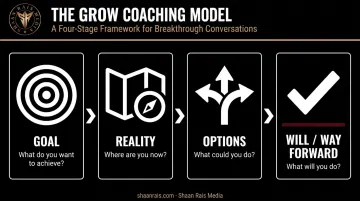
From there, most coaches apply a structured framework. The GROW model is the most widely used:
- Goal: What outcome are you actually trying to achieve?
- Reality: What's the current situation, honestly?
- Options: What paths could get you there?
- Will (sometimes "Way Forward"): What will you commit to doing, and by when?
Performance Consultants credits Sir John Whitmore and colleagues with developing GROW in the late 1980s and early 1990s, later popularized through Whitmore's 1992 book Coaching for Performance.
Coaches applying a positioning- or performance-focused methodology, similar to the structured 120-day protocols used in personal branding practices, follow this same discovery-to-action arc rather than jumping straight to tactics.
Action Plans and Accountability
With goals and reality mapped out, the coach and client co-create an action plan: specific milestones, deadlines, and checkpoints. This isn't a static document. It evolves.
Regular check-ins (weekly or biweekly, typically) serve three purposes:
- Keep momentum between sessions
- Surface obstacles before they derail progress
- Adjust the plan based on what's actually working
Progress gets measured in concrete terms: goal attainment, observable behavior change, self-reported confidence shifts. Good coaching isn't vague impressions; it's tracked.
Who Needs Personal Performance Coaching?
Coaching serves different people for different reasons. Three groups show up most often.
Mid-Career Professionals Hitting a Plateau
You've been solid for years. Reviews are fine. But the next promotion keeps slipping past you, and you can't quite name why. Coaching here typically identifies specific skill gaps — delegation, executive presence, strategic communication — that stall growth even when technical performance is strong.
Executives, Founders, and High-Performing Operators
Seniority creates a strange problem: fewer people willing to give you honest feedback. Coaching fills that vacuum.
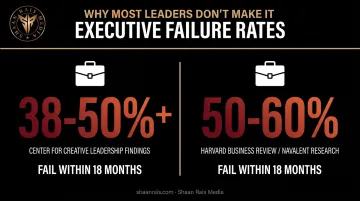
The stakes are real. The Center for Creative Leadership's literature review puts outright executive failure within the first 18 months between 38% and over half, depending on definition. Separate Harvard Business Review research from Navalent found similarly that 50-60% of executives fail within 18 months of being hired or promoted.
For this group, there's a catch. Getting better at the job isn't always the bottleneck. Plenty of capable operators plateau not because their skills lag, but because the market — boards, investors, industry peers — hasn't updated its perception of them. Coaching addresses the skill side of that equation. Closing the gap on how the market perceives and prices someone is a separate, related challenge worth solving alongside it.
Entrepreneurs and Solo Professionals
Building something alone is isolating. There's no manager to sanity-check decisions, no team to share the weight of setbacks. Coaching here often focuses on:
- Prioritization frameworks for constant competing demands
- Burnout prevention before it becomes a crisis
- Decision-making structures for high-ambiguity situations
Key Benefits of Personal Performance Coaching
The value of coaching isn't just anecdotal anymore. The most cited data comes from the 2009 ICF Global Coaching Client Study, which surveyed 2,165 coaching clients across 64 countries.
Self-reported outcomes from that study:
- 70% reported improved work performance
- 72% reported improved communication skills
- 80% reported improved self-confidence
- 99% were somewhat or very satisfied with coaching overall
Worth noting: these are client self-reports, not controlled experimental results. Still, the consistency across a large sample is meaningful.
Beyond the numbers, coaching tends to deliver in a few specific ways:
- Self-awareness: coaches surface blind spots that are nearly impossible to spot on your own
- Skill development comes from scheduled check-ins that keep you consistent when motivation dips
- Stress management — clients build repeatable tools for handling pressure, not just pep talks
The same study found companies sponsoring coaching reported a median ROI of 700%, though that figure came from a subset of only 189 respondents (about 9% of the full sample) who could provide complete financial data. Treat it as a strong directional signal, not a guarantee.
This tracks with what high-ticket coaching engagements aim for: measurable business impact, not just feel-good sessions. Shaan Rais's own client work, for instance, has produced documented outcomes like 400% year-over-year revenue growth tied directly to positioning changes.
How Much Does a Personal Performance Coach Cost?
Pricing swings widely based on experience, specialization, format, and geography.
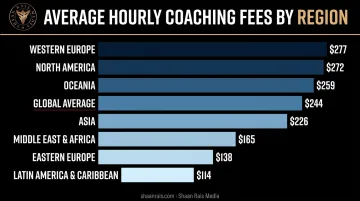
The most current benchmark comes from the 2023 ICF Global Coaching Study, based on over 14,500 responses across 157 countries:
| Region | Average Fee (Per Hour, USD) |
|---|---|
| Western Europe | $277 |
| North America | $272 |
| Global Average | $244 |
| Oceania | $259 |
| Asia | $226 |
| Middle East & Africa | $165 |
| Eastern Europe | $138 |
| Latin America & Caribbean | $114 |
In the US, rates typically track close to the North American average, often running higher for executive-tier or specialized coaches.
Before setting a budget, keep these factors in mind:
- Coaches working with executives report the highest average fees
- Most reputable coaches sell packages or multi-month retainers, not single sessions, since sustained change rarely happens in one meeting
- Specialized or high-ticket coaching programs, often structured as multi-month protocols, tend to run at premium tiers due to the depth and speed of transformation involved
How to Choose the Right Personal Performance Coach
Credentials matter, but they're a floor, not a ceiling.
Check Training Credentials First
The ICF offers three recognized credential levels:
| Credential | Minimum Training | Minimum Experience |
|---|---|---|
| ACC (Associate) | 60+ hours | 100+ hours, 8 clients |
| PCC (Professional) | 125+ hours | 500+ hours, 25 clients |
| MCC (Master) | 200+ hours | 2,500+ hours, 35 clients |
These signal formal training, ethics accountability, and assessed competence. They don't guarantee niche fit.
Prioritize Rapport Over Resume
Book an initial consultation before committing to anything. Pay attention to:
- Does this person listen more than they talk?
- Do they ask sharp, specific questions about your actual situation?
- Does their communication style match how you process feedback?
Fit determines whether you'll actually follow through between sessions. A brilliant coach who doesn't match your style will underdeliver.
Match the Coach to Your Actual Gap
Before hiring anyone, get honest about what's actually holding you back:
- Skill-building gap — you need to develop a specific competency (delegation, negotiation, technical mastery)
- Leadership gap — you're stepping into bigger responsibility and need structural support
- Positioning/visibility gap — your capability has outpaced how the market currently perceives you
That third category is easy to miss. Plenty of professionals invest in skill development for years, when the real constraint is that nobody outside their immediate network knows what they're capable of.
In those cases, more coaching on the same skills won't help. Pairing traditional performance coaching with a positioning-focused practitioner, one who specializes in how markets perceive and price already-capable operators, often closes the gap faster than additional skill training alone.
Frequently Asked Questions
What is a personal performance coach?
A personal performance coach is a professional who helps individuals set and achieve specific, measurable goals through structured feedback, accountability, and tailored action plans. The focus is forward-looking, not diagnostic.
How much does a personal performance coach cost?
Rates vary by experience and region, with the global average around $244 per hour, according to the 2023 ICF Global Coaching Study. North American rates trend closer to $272 per hour, and most coaches sell multi-session packages rather than single sessions.
How is personal performance coaching different from life coaching?
Performance coaching targets specific, measurable goals like a promotion or revenue target. Life coaching addresses broader life satisfaction, balance, and personal fulfillment, without the same emphasis on quantifiable outcomes.
Do I need to check certifications before hiring a performance coach?
Certifications like ICF's ACC, PCC, or MCC signal formal training and ethical standards, which matter. But real-world results, client references, and personal rapport are just as important as the credential itself.
How long does a typical coaching engagement last?
Engagement length varies by provider, though a widely cited 2009 ICF study found an average of 12.8 months, with 73% lasting a year or less. Many providers structure shorter 3-6 month packages, especially for focused goals.
Is personal performance coaching actually worth it?
For committed clients, yes. That 2009 ICF study found 70% reported improved work performance and 80% reported greater self-confidence after coaching. Results depend heavily on client engagement and coach-client fit.