Introduction
People don't just trust brands anymore — they trust people. In a world where every industry is crowded with competing messages, advertisements, and content, the voices that actually move decisions belong to individuals who've earned the right to be heard. Those individuals are opinion leaders.
That trust dynamic isn't new. The concept of opinion leadership predates social media by decades — and the reason it keeps resurfacing is because it reflects something fundamental about how humans process information and make decisions. We look to people we trust, not just channels we consume.
This article breaks down exactly what opinion leaders are, why their influence matters for marketing and business strategy, how to recognize one, and what it actually takes to become one.
Whether you're a brand trying to reach a niche market or a professional building authority in your field, understanding opinion leadership tells you who to align with — and who to become.
Key Takeaways
- Opinion leaders are trusted, knowledgeable individuals whose views shape decisions and behavior within a specific niche
- Their influence comes from earned credibility and expertise, not follower count
- Opinion leadership exists at every scale, from national figures to respected local experts
- Brands that align with the right opinion leaders gain access to pre-built trust and highly targeted audiences
- Anyone can build opinion leader status by owning a niche and consistently demonstrating real expertise
What Is an Opinion Leader?
An opinion leader is an individual — or sometimes an organization — whose knowledge, credibility, and standing in a specific domain gives them the power to shape how others think and decide. The influence isn't general. A respected chef's opinion on cookware carries weight; their opinion on enterprise software does not.
The Two-Step Flow Model
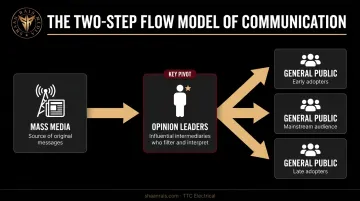
The academic foundation goes back further than most practitioners realize. Paul Lazarsfeld, Bernard Berelson, and Hazel Gaudet first identified the phenomenon in The People's Choice (1944), a study of voter behavior. Elihu Katz and Lazarsfeld then formalized it in Personal Influence (1955), introducing what became known as the two-step flow model of communication.
The model works like this: mass media information doesn't flow directly to the general public with equal impact. It reaches opinion leaders first — people who consume, interpret, and evaluate it — and those leaders then relay it to their communities in a more trusted, digestible form.
That dynamic hasn't faded with digital media. A 2025 study of 1,066 online participants found that commenters mediate news effects for passive readers in online communities — the two-step flow playing out in comment sections and feeds rather than living rooms.
Formal vs. Informal Opinion Leaders
Not all opinion leaders hold titles or credentials. There are two distinct categories:
- Formal opinion leaders — Politicians, executives, credentialed experts, and industry professionals whose authority is formally recognized
- Informal opinion leaders — Trusted peers, community figures, popular bloggers, or experienced tradespeople whose influence is earned through personality, track record, and genuine relationships
In marketing contexts, these individuals are often called Key Opinion Leaders (KOLs). The American Marketing Association defines them by expertise and recommendation behavior — not by prestige or follower count.
Organizations can hold this role too. A respected trade publication, consumer review body, or professional association can shape purchasing behavior across an entire industry.
Why Opinion Leaders Matter in Marketing and Business
The core reason opinion leaders matter is simple: audiences don't just receive their message — they act on it.
Nielsen's 2021 survey of more than 40,000 consumers found that 88% of people trusted recommendations from people they know more than any other advertising channel. That gap between peer trust and brand-driven messaging is exactly where opinion leaders operate.
Reducing Consumer Uncertainty
New products, unfamiliar services, or significant purchasing decisions carry inherent risk for buyers. Opinion leaders accelerate adoption by eliminating that hesitation. When a trusted voice validates a product or service, audiences skip the skepticism phase and move directly toward a decision. The opinion leader has already done the evaluation work — followers borrow that judgment.
This effect is especially pronounced in high-consideration purchases, where buyers actively seek credible signals before committing:
- Industrial equipment selection
- Contractor and vendor hiring decisions
- B2B supplier relationships
These aren't impulse decisions. Each one carries real financial and operational stakes.
The B2B Thought Leadership Effect
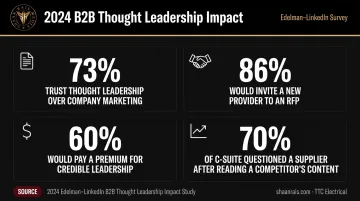
The evidence for opinion leadership in professional and B2B contexts is compelling. In Edelman and LinkedIn's 2024 survey of 3,484 global executives:
- 73% trusted thought leadership content over a company's own marketing materials
- 86% said strong thought leadership could prompt them to invite a new provider to an RFP
- 60% would pay a premium to work with a company whose leadership they recognized as credible
- 70% of C-suite respondents had questioned a current supplier after reading a competitor's thought leadership content
For businesses in industrial, commercial, or professional services markets, the implication is direct: publicly demonstrated expertise determines who gets added to the shortlist — and who gets passed over.
Reaching Niche Audiences Traditional Advertising Misses
The B2B data points to one dimension of opinion leadership. But the same dynamic plays out across niche communities of every kind. Broad advertising buys attention. Opinion leaders deliver access to audiences that have already self-selected around a specific interest or need — and that pre-built trust is difficult to replicate through paid media alone.
Opinion leaders also serve a crisis communication function: a trusted voice can clarify misinformation, calm concerns, or restore confidence during difficult periods. WHO's 2024 policy guidance identifies community-trusted intermediaries as essential channels for exactly this reason.
Key Characteristics of an Opinion Leader
Opinion leadership isn't one trait — it's a combination of attributes that, together, create the kind of credibility audiences act on.
At a glance, the five core characteristics are:
- Charisma and genuine likability — authenticity that makes audiences want to listen
- Domain expertise — deep, demonstrable knowledge built over time
- Strong communication skills — the ability to translate complex ideas into actionable insight
- Earned trust — a track record of honesty and commitment to the community's interests
- Consistent presence — regular engagement that sustains influence over time
Charisma and Genuine Likability
Opinion leaders draw people in through authenticity, not performance. They're relatable and engaging in ways that make audiences want to listen — not because they're famous, but because they feel real. This quality doesn't require broad visibility. It requires consistency of character.
Domain Expertise
Genuine, developed expertise is the non-negotiable foundation. Audiences trust opinion leaders because they demonstrably know things others don't — and they've put in the time to get there. That depth of knowledge is what distinguishes an opinion leader from an enthusiast: it's apparent, consistent, and hard to fake.
Strong Communication Skills
Knowing a subject deeply doesn't automatically translate into influence. Effective opinion leaders can take complex information and make it clear, relevant, and actionable for their specific audience — whether through writing, speaking, video, or direct conversation.
Earned Trust and Respectability
There's a meaningful difference between claimed authority and earned authority. Opinion leaders build trust over time through consistent honesty, accurate track records, and demonstrated commitment to their community's interests. That foundation is what allows their influence to outlast trends and shifting platforms.
Consistent Community Presence
Opinion leaders show up regularly. Whether through social media, professional networks, events, or direct community involvement, sustained engagement keeps a relationship alive — and creates a genuine sense of reciprocity that audiences recognize and respond to.
Types of Opinion Leaders With Real-World Examples
Opinion leadership operates at different scales, and the right type for any given purpose depends on what kind of influence is needed.
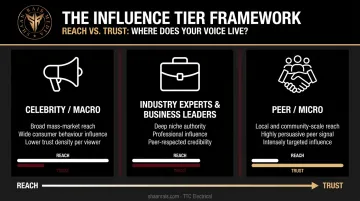
Three main categories:
Celebrity/macro opinion leaders — High-visibility public figures (athletes, entertainment personalities, prominent CEOs) who shape broad consumer behavior through sheer reach. A major tech executive's comments on AI adoption can move entire industries.
Industry experts and business leaders — Executives, credentialed professionals, and experienced practitioners whose opinions shape how specific industries evolve. Their influence is narrower but often deeper and more lasting.
Peer/micro opinion leaders — Local community figures, trusted tradespeople, or colleagues whose influence is intensely local but highly persuasive — think of a respected contractor whose clients consistently ask for vendor recommendations.
Effectiveness Is About Niche Alignment, Not Audience Size
Scale alone doesn't determine impact — alignment does. A 2025 meta-analysis of 135 influencer marketing experiments found that smaller creators consistently outperformed larger ones for engagement through personal connection, while credibility remained a consistent driver of purchase intention regardless of scale.
A micro opinion leader with 500 highly engaged local contacts in a Kentucky industrial market generates more actionable business than a national figure with millions of passive followers disconnected from the region or the work.
Shaan Rais, founder of Shaan Rais Media, illustrates exactly this. His 22+ years as a volunteer firefighter and a contracting career built almost entirely on word-of-mouth referrals created a foundation of trust no advertising spend can replicate. That authority — earned through demonstrated expertise, consistent values, and genuine community presence — is precisely what the research identifies as the real driver of influence.
Opinion Leaders vs. Influencers: Key Differences
The terms get used interchangeably, but the distinction matters — especially for brands making partnership decisions.
| Opinion Leader | Influencer | |
|---|---|---|
| Defined by | Domain credibility and earned trust | Follower count and content output |
| Source of influence | Who they are (expertise, character, position) | What they do (entertain, create, maintain visibility) |
| Audience relationship | Trust through expertise | Engagement through content |
| Niche dependency | High — influence is domain-specific | Variable — can shift between topics |
Opinion leaders influence because of who they are — their expertise, position, or earned credibility in a specific domain. Influencers derive influence from what they do: creating content, maintaining visibility, and building engagement. An opinion leader can function as an influencer, but an influencer without domain expertise rarely earns the same level of trust.
This distinction has real consequences for brands. When a brand's product category doesn't align with an influencer's domain, the endorsement loses credibility with the audience. CeraVe's decision to partner with more than 50 dermatologist creators for their SPF campaign demonstrates the alternative approach: the brand chose domain credibility over raw reach, matching skincare products with medical professionals whose expertise made the endorsement credible rather than merely visible.
That's what separates a partnership that converts from one that simply generates impressions: the audience's pre-existing belief in the source.
How to Become an Opinion Leader in Your Industry
Opinion leadership is built, not assigned. The path is consistent across industries.
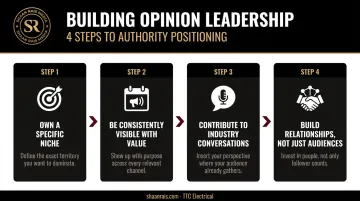
Own a Specific Niche
Opinion leaders don't try to influence everyone. They focus on a defined domain where they have genuine expertise and authentic investment. The narrower the focus initially, the faster credibility builds.
Define your niche clearly: not just "coaching" but "Perception Engineering for high-performing operators." Not just "marketing" but "personal brand authority for service-based executives." Specificity signals depth.
Be Consistently Visible with Genuine Value
Visibility without substance doesn't build opinion leadership. The same goes in reverse — substance with no visibility stalls just as fast. Showing up regularly with content that actually helps your audience is what creates the credibility and familiarity people need before they extend trust.
This means:
- Contributing articles, posts, or commentary in industry forums
- Speaking at events or on podcasts your audience attends
- Sharing honest, specific insights on social channels your buyers use
- Engaging directly with questions and conversations in your community
Build Relationships, Not Just Audiences
The most durable opinion leadership is built on genuine community engagement. Responding to questions, acknowledging other credible voices, and consistently serving others' interests builds the kind of reciprocal trust that compounds over time.
Transparency, honesty, and servant leadership are also strategic choices, not just ethical ones. Shaan Rais's approach at Shaan Rais Media demonstrates this clearly: he codified a mission around integrity and faith-driven servant leadership, then built a digital presence that communicates those values directly to his target clients. The result is an authority-building strategy rooted in who he actually is — which is exactly what makes it sustainable.
Frequently Asked Questions
What does it mean to be an opinion leader in marketing?
In marketing, an opinion leader is a trusted individual or entity whose views on a product, service, or trend directly shape the purchasing decisions of their audience. Audiences act on their recommendations in ways they simply don't respond to traditional advertising — because the credibility is already earned.
What is the difference between an opinion leader and an influencer?
Influencers are primarily defined by their content reach and follower count. Opinion leaders are defined by domain credibility and earned trust — their influence is tied to demonstrated expertise, not just visibility. A large following doesn't automatically confer opinion leadership.
What are some real-world examples of opinion leaders?
Opinion leaders appear in every category. Tech CEOs shape how industries adopt emerging technology; local contractors become the go-to vendor referral source for their clients; doctors guide patient purchasing decisions; consumer review publications shift buying behavior across entire sectors.
What are the most important characteristics of an opinion leader?
The core traits are domain expertise, earned credibility and trust, strong communication skills, genuine likability or charisma, and consistent community presence. No single trait is sufficient on its own — effective opinion leadership requires all five working in combination.
Can a small business owner or local professional become an opinion leader?
Yes, and often more powerfully than national figures. Opinion leadership is not exclusive to celebrities or public figures with massive platforms. Local professionals who demonstrate consistent expertise, integrity, and community engagement regularly become the most trusted voices in their market — which translates directly into purchasing influence.
How do opinion leaders affect consumer buying decisions?
Opinion leaders reduce buyer uncertainty by validating products and services through voices audiences already trust. Because that credibility is pre-established, recommendations from opinion leaders move people from awareness to action far more efficiently than brand advertising alone.