

That freeze-up moment is more common than most people admit. And it matters more than most people realize. How you talk to your boss doesn't just affect one conversation — it shapes how leadership sees your judgment, your reliability, and your readiness for more responsibility.
The words you choose, the tone you bring, and the timing you pick all carry weight. This single skill quietly influences raises, promotions, and the day-to-day trust your boss places in you. Yet almost nobody teaches it directly.
This guide breaks down the most common reasons employees need to talk to their boss, the specific do's and don'ts for each scenario, and how to walk into any conversation — hard or easy — with a clear head.
Key Takeaways
- Preparation beats charisma: clarify your goal, gather examples, and time it right
- Match your approach to the conversation type, but stay honest and solution-focused every time
- Avoiding pitfalls like gossip, ultimatums, and chain-of-command violations protects your reputation as much as good communication builds it
- Treat every exchange as a rehearsal for the next promotion, raise, or reference you'll need
Common Reasons You May Need to Talk to Your Boss
Most boss conversations fall into a handful of predictable buckets. Recognizing which one you're in helps you prepare before you even book the meeting.
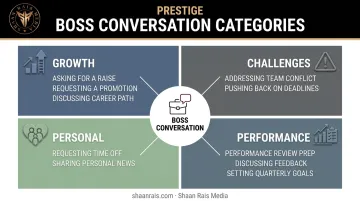
Typical reasons employees need face time with their boss include:
A promotion ask falls under growth, while a conflict with a coworker signals a challenge conversation. Caregiving needs and scheduling changes land in the personal bucket. Knowing your category before you walk in changes how you should frame the conversation.
How Often Should You Talk to Your Boss?
More often than you probably do, but in smaller doses. Gallup's research on nearly 15,000 employees found that regular 15-30 minute check-ins often carry more impact than rare 30-60 minute meetings — and only 16% of employees described their most recent manager conversation as extremely meaningful (Gallup). Frequent, focused conversations beat rare, high-stakes ones.
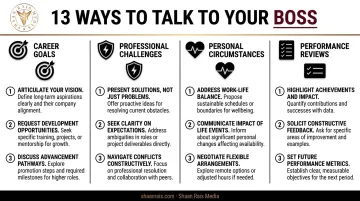
The Do's: 15 Ways to Talk to Your Boss the Right Way
The Do's: 13 Ways to Talk to Your Boss the Right Way
These do's aren't one-size-fits-all. Talking about a promotion requires a different posture than talking about a personal hardship. Here's how to approach each type.
Do's for Discussing Your Future and Career Goals
Career conversations go nowhere without clarity going in. Harvard Business Review's guidance on career development is direct: don't just work hard and wait to be noticed — initiate the discussion yourself (HBR).
- Clarify your own goals first. Know what success looks like for you before asking your boss to help you get there.
- Research internal growth paths. An informed ask lands differently than a vague one.
- State your value with specifics. Reference real accomplishments, then ask directly for your boss's perspective on your next move.
Do's for Addressing Professional Challenges
Challenges — conflict, unclear expectations, unfair workloads — need structure, not venting.
- Schedule a dedicated meeting. Don't ambush your boss in the hallway.
- Rehearse your key points. This keeps you calm and on-message.
- Keep a running log. Note dates, incidents, and specifics so you're factual, not emotional.
- Ask for guidance or next steps before ending the conversation. Don't just describe the problem and walk away.
Fast Company's reporting on difficult workplace conversations recommends splitting your notes into two columns before the meeting: facts and assumptions (Fast Company). Only bring the facts column into the room.
Do's for Sharing Personal Circumstances
- Communicate early. Flag an issue as soon as you know it might affect your work — not once it's already a crisis.
- State what you need clearly. Pair the ask with a proposed solution, not just the problem.
- Close with appreciation. A quick thank-you, spoken or in a follow-up note, goes further than people expect.
SHRM notes that an accommodation request doesn't require formal language like "ADA" — describing the limitation and the adjustment you need is enough (SHRM).
Do's for Performance Reviews and Feedback
- Practice active listening. Treat feedback as a growth signal, not an attack.
- Ask about your boss's own experience. "How did you handle something similar?" builds rapport and gets you practical advice.
- Share your improvement plan. Show commitment, not just acknowledgment.
Here's why this matters: only 14% of employees strongly agreed that performance reviews actually inspired improvement, according to Gallup (Gallup). A review that ends with a real action plan is far more useful than one that ends with a nod.
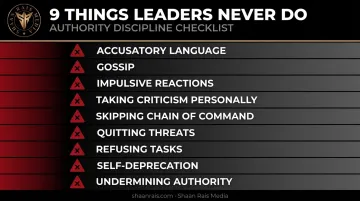
The Don'ts: 9 Things to Avoid When Talking to Your Boss
Some mistakes are loud. Others are quiet habits that slowly erode trust. Both cost you.
- Don't use accusatory language. Complaints framed as attacks put your boss on the defensive immediately.
- Don't gossip about coworkers. Bringing third-party drama into a one-on-one damages your own credibility, not just theirs.
- Don't react impulsively. Even when a conversation feels unfair, an aggressive reaction in the moment rarely serves you later.
- Don't take criticism personally. HBR's research on feedback identifies "identity triggers" — the instinct to hear feedback as a verdict on your worth rather than your work (Harvard Business Review). Separate the two.
- Don't skip the chain of command. Going over your boss's head without a valid reason damages trust on both sides.
- Don't threaten to quit as leverage. It seldom lands the way people hope, and it changes how you're viewed even if it "works" once.
- Don't refuse reasonable tasks out of frustration. It's a short-term statement with long-term consequences.
- Don't be overly self-deprecating. Downplaying your work doesn't read as humble — it reads as unsure.
- Don't undermine your boss's authority. Even in disagreement, respect for the role matters.
Notice the pattern: almost every "don't" here isn't about being wrong — it's about how the message gets delivered.
How You Talk to Your Boss Shapes Your Bigger Career Brand
Every conversation you have with your boss is a small data point. String enough of them together, and they form leadership's opinion of your competence, your reliability, and your readiness for more.
Personal branding experts describe this same dynamic at a larger scale. Shaan Rais, who built his practice on helping skilled professionals close the gap between their capability and how the market perceives them, argues that positioning often matters as much as talent.
That principle plays out inside a company too, one conversation at a time:
- Professionals who communicate clearly and calmly in day-to-day check-ins often find it easier to advocate for raises and promotions later
- They've already built a track record — leadership doesn't have to guess whether they can handle more visibility
- Consistent, confident positioning often determines who gets noticed for bigger opportunities and who gets passed over
This philosophy centers on branding what makes you uniquely valuable, not just what you do. It applies as much to a one-on-one with your manager as to a market-facing personal brand. Visibility and credibility compound, and every well-handled conversation with your boss adds to both.
Frequently Asked Questions
How to respectfully talk to your boss?
Schedule the conversation instead of ambushing them, keep your tone calm and factual rather than emotional, and come prepared with specific points or examples. A little preparation signals respect faster than any words you choose.
Is it okay to speak up to your boss?
Yes — it's expected, especially when framed around solutions rather than complaints. Withholding feedback often leads to disengagement over time, both for you and for the working relationship.
How often should you speak to your boss?
Favor regular, smaller check-ins over rare, high-stakes conversations. Adjust the frequency based on your role, current projects, and your company's culture.
How to talk to your boss without crying?
Write down your key points beforehand and practice saying them aloud. Take pauses to breathe if you feel emotional, and reframe the conversation as fact-based rather than personal.
What should you never say to your boss?
Avoid ultimatums, gossip about coworkers, and blanket complaints with no proposed solution. Each of these puts your boss on the defensive instead of inviting collaboration.
How do you prepare for a difficult conversation with your boss?
Clarify your goal for the conversation first, then gather specific examples or documentation to support your points. Rehearse the key parts in advance so you stay calm and focused when it counts.