
The title was identical. The influence wasn't.
Many new leaders lean entirely on their title, then wonder why people comply but never really follow. They confuse the authority a role grants with the trust a person earns. Those are two different currencies, and only one of them survives a layoff, a restructure, or a career change.
This guide breaks down what positional authority actually is, where it comes from, and where it runs out of road. We'll look at real examples, compare it to personal and relational authority, and cover how to use a title well while you build something that outlasts it.
Key Takeaways
- Positional authority comes from your role; it vanishes the moment you lose that role
- Pressure tactics generate compliance, not commitment, producing weak buy-in and high resistance
- Trust in a leader strongly predicts job satisfaction and retention, more than title alone
- The strongest leaders pair formal authority with earned credibility and consistent character
- Personal brand positioning lets your authority travel with you across jobs and industries
What Is Positional Authority?
Positional authority is the power granted to someone because of their formal role, rank, or title, not because of who they are as a person. It's assigned top-down through an org chart, an appointment, an election, or an institution's structure. You don't earn it through relationships. You receive it the day you take the seat, and that's exactly why it belongs to the role rather than the person holding it.
The Four Types of Positional Power
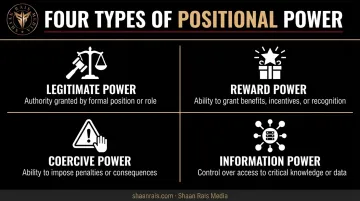
Once someone holds a title, they inherit a bundle of related powers with it:
- Legitimate power — the formal right to direct others simply because the role calls for it
- Reward power — the ability to grant raises, promotions, or perks
- Coercive power — the ability to discipline, demote, or terminate
- Information power — control over key data, decisions, or networks tied to the position
None of these require skill or character to activate. A brand-new VP has the same reward and coercive power on day one that a beloved, 10-year veteran VP had on their last day. The title grants the power instantly; it doesn't grant the respect that makes people want to follow you.
Positional authority isn't inherently bad. Structured systems need it. Companies, governments, and even families require a final point of accountability, someone who can make the call when consensus isn't happening. The problem isn't having positional authority. It's assuming it's enough on its own.
Examples of Positional Authority in Action
You'll recognize this pattern the moment you see it laid out:
| Role | What the position grants |
|---|---|
| CEO or executive | Authority to set strategic direction, allocate company-wide resources |
| Manager or team lead | Authority to assign tasks, approve time off, run performance reviews |
| Department head | Control over budget and processes within their unit |
| Parent | Authority over a child's decisions and boundaries |
| Elected official or pastor | Authority tied directly to the office held |
| Police officer | Authority tied to the badge, not the individual wearing it |
Notice the common thread: the authority is tied to the seat, not the person sitting in it. Fire the department head and hire a replacement tomorrow, and that replacement inherits the exact same budget control, instantly. No trust required. No track record needed.
This creates a predictable failure pattern. A new leader assumes the title alone will earn loyalty, so the team complies technically, showing up and doing the minimum required.
What that compliance leaves out matters most:
- Going above and beyond on projects without being asked
- Defending the leader's decisions when they're not in the room
- Staying through a tough quarter instead of taking a better offer elsewhere
The title guarantees obedience. Earning genuine commitment takes something the org chart can't grant.
Positional Authority vs. Personal Authority
Positional authority comes from your title. Personal authority comes from your character, your expertise, and how people actually perceive you. It survives even after you lose the title.
Here's the direct comparison:
| Dimension | Positional Authority | Personal Authority |
|---|---|---|
| Source | Assigned by an organization | Earned through consistent actions and results |
| Durability | Disappears when the role ends | Travels with you to any job, company, or industry |
| How it's built | Appointment or promotion | Reputation, demonstrated expertise, market perception |
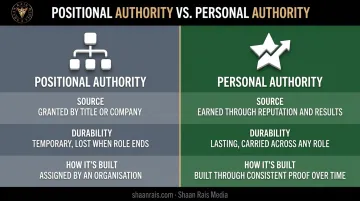
That table shows why personal authority outlasts a title, but there's a related force worth naming: relational authority, personal authority's close cousin. It's the trust and respect built through consistent, faithful behavior with the specific people you lead, over months and years, not the moment you're introduced. You can't announce relational authority into existence. You accumulate it.
Why Pure Title-Reliance Backfires
Leaning entirely on your position is riskier than most new managers realize. A landmark meta-analysis covering 106 samples and over 27,000 people found that trust in a direct leader correlated strongly with job satisfaction (r = .55) and organizational commitment (r = .44), and it predicted lower turnover intention (Dirks and Ferrin's meta-analysis). Title alone doesn't move those numbers. Trust does.
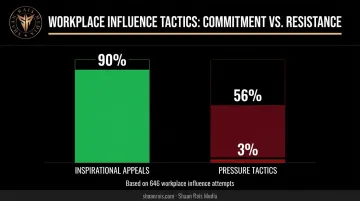
Research on influence tactics makes the gap even sharper. Analyzing 646 real workplace influence attempts, researchers found inspirational appeals generated 90% commitment, while pure pressure tactics generated just 3% commitment and 56% resistance (Falbe and Yukl's influence tactics study). "Because I said so" works. It just doesn't work well.
The best leaders, and the most in-demand professionals in any field, don't pick one or the other. They hold a title and they've deliberately built how others perceive their competence and character. That combination is what actually moves people.
The Pros and Cons of Leaning on Positional Authority
Positional authority earns its place for good reason. Used correctly, it:
- Enables fast decision-making when there's no time for group consensus
- Provides clear accountability — someone owns the outcome
- Allows unity in moments where full agreement simply isn't possible
Lean on it too heavily, though, and the same tool starts working against you:
- Breeds compliance instead of genuine commitment
- Stifles creativity and psychological safety across the team
- Accelerates turnover when it's the only leadership tool in the toolbox
Google's own internal research on 180 teams found psychological safety was the single most important factor in team effectiveness, ahead of seniority, team size, or even individual talent (Google's Project Aristotle). Teams that feel safe questioning a decision consistently outperform teams that just execute orders quietly — the data backs what most leaders sense instinctively.
Positional authority is a starting point, not a strategy. It opens the door. It doesn't guarantee anyone wants to walk through it with you.
How to Use Positional Authority Effectively
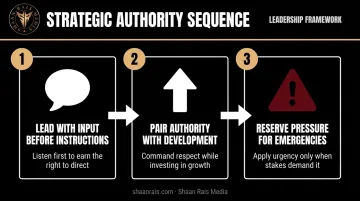
Holding a title isn't the problem. Defaulting to it as your only move is. Three shifts change the outcome:
- Lead with input before instructions. Gather perspectives before making the final call, then be transparent about the reasoning behind your decision. People don't need to agree with every choice — they need to understand why it was made.
- Pair authority with development. Delegate to grow your team's capability, not just to offload work you don't want. Delegation that only transfers tasks breeds resentment. Delegation that builds skill breeds loyalty.
- Reserve "because I said so" for genuine emergencies. Save legitimating and pressure tactics for rare, high-stakes moments. Default to them regularly, and you erode the exact relational trust that makes your title work in the first place.
Leadership researcher Daniel Goleman's study of nearly 4,000 executives found coercive, command-style leadership generally damaged team climate. Still, it wasn't useless — it fit turnarounds, crises, and serious performance problems where speed mattered more than buy-in.
Authority itself isn't the mistake. Treating it as your default setting for every situation, including the ones that call for input and patience, is what damages trust.
Building Authority That Outlasts Your Title
Titles change. Companies restructure. Roles get eliminated in a single meeting. But a well-positioned reputation doesn't disappear with the org chart. It travels with you into the next job, the next industry, wherever you go next.
This is the pivot most professionals miss. They invest years building expertise inside a company, then discover that expertise was never separated from the title that housed it. When the title goes, so does the perceived authority, at least in the eyes of anyone who only knew them through that role.
Shaan Rais, founder of his personal-branding and positioning practice and the mind behind the term Perception Engineering, has built his entire methodology around solving exactly this problem. His core belief: the market isn't missing you because you're not good enough. It's missing you because your positioning hasn't caught up with your capability.
Rais, an Industrial-Organizational Psychologist who's worked with over 400 operators across 50+ industries, makes the case that the professionals who command premium pricing aren't necessarily the most talented in the room.
They're the most positioned. Their reputation precedes them before anyone checks their business card or LinkedIn title.
That distinction shows up in how he built his own credibility, too. He's been direct that he "never had business cards" during his most successful stretches, favoring durable credibility vehicles instead. A published book is the clearest example, since, as he puts it, "no one throws away a book."
A title fades from memory in a conversation. A book, an endorsement, or a documented track record sits on someone's shelf and keeps working for you. Rais points to a few forms this durability takes:
- A published book that outlives any single job title
- A documented client outcome or case study others can reference
- A media feature or endorsement that exists independent of your current role
Here's the reframe: use the position you have right now as a launchpad. Use the title. Build the reputation underneath it. When the title eventually changes, and it will, the authority you actually built stays with you.
If you're an executive, founder, or operator who wants that kind of durable positioning rather than authority that expires with your next job change, book a Brand Strategy Consultation call to explore how Shaan Rais's Positioned for Profit program approaches it.
Frequently Asked Questions
What is the meaning of positional authority?
Positional authority is power granted by a formal role or title within an organization's hierarchy. It exists independent of the person's personal traits, skill, or character.
What are examples of positional authority?
Common examples include a CEO's authority over strategy, a manager's authority to approve time off, a department head's budget control, and an elected official's authority tied to their office. In every case, the authority stays with the seat, not the individual.
What is the difference between positional authority and personal authority?
Positional authority is assigned by an organization and disappears the moment you leave the role. Personal authority is earned through your character and results, and it travels with you to any new job or industry.
Is positional authority good or bad?
It's neutral, and even necessary, for any organization that needs clear accountability. It becomes harmful only when it's the sole leadership tool a person relies on.
What are the disadvantages of relying only on positional authority?
Overreliance breeds minimal compliance instead of real commitment. It also lowers creativity and psychological safety, and raises turnover risk among high performers.
How can you build authority that doesn't depend on your job title?
Focus on demonstrated expertise, consistent relationship-building, and deliberate personal brand positioning. Credibility vehicles like published work or documented results help your reputation travel independent of any single role.