

That's co-branding. And it's not a new idea—Nike and Apple did it in 2006, Taco Bell and Frito-Lay turned it into a billion-dollar product line. But co-branding carries a tension few businesses talk about: done well, it multiplies brand value. Done poorly, it dilutes it, or worse, transfers a partner's problems onto you.
This guide covers what co-branding actually means, the four core strategic approaches, real examples worth studying, and how to execute a partnership that strengthens your position instead of blurring it.
Key Takeaways
- Co-branding merges two brand identities into one shared product, service, or campaign
- Four recognized strategies exist: market penetration, global branding, brand reinforcement, and brand extension
- Partnerships succeed when both brands have clear positioning and aligned values before signing anything
- Unlike co-marketing, which promotes existing offerings, co-branding creates something entirely new
What Is a Co-Branding Strategy?
Co-branding is when two or more brands collaborate on a good, service, or campaign to combine their market strength, awareness, and credibility. The American Marketing Association describes it simply as "the marketing of brands in combination."
Each partner keeps its own identity—logo, colors, brand equity stay intact. But together, they create what's often called a "melded" experience. Think of the Nike swoosh and Apple logo appearing side by side on the same product packaging. Neither brand disappears. They combine.
That kind of pairing doesn't happen by accident. Brands pursue co-branding instead of going solo for a few practical reasons:
- Expanded market reach without building an audience from scratch
- Shared marketing and operational costs
- Increased perceived value through association with a trusted partner
- Reduced vulnerability to private-label or generic competition
Co-Branding vs. Co-Marketing
These terms get used interchangeably, and that's a mistake. Rocket Lawyer's guidance draws a clean line: co-marketing partners promote separate products to expand reach. Co-branding partners fuse their brands to create and sell a single new product.
A simple test: did the partnership produce one new offering, or two brands promoting their existing, separate offerings side by side?
- Co-marketing example: GoPro and Red Bull cross-promoting content across each other's channels while selling their own separate products
- Co-branding example: Nike and Apple combining hardware and software into the Nike+ sensor system—a single product neither brand could sell alone
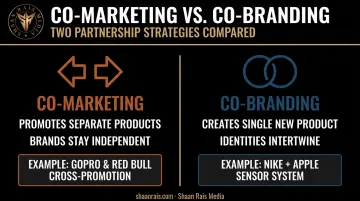
Co-branding carries higher risk and higher reward, because brand identities become intertwined in the consumer's mind. If one partner stumbles, the other often takes the hit too. That's why smart companies pilot a co-branded product on a small scale before a full rollout. Taco Bell tested Doritos Locos Tacos with 200 consumers, then ran a full year of limited-market testing in three cities before going national. The market validated the idea before the risk scaled up.
The 4 Core Co-Branding Strategies
Branding experts, including Investopedia's breakdown of co-branding, generally sort co-branding into four distinct approaches. Each fits a different business goal.
Market Penetration Strategy
This is the conservative play. Two partnered or merged firms keep their existing market share and brand names intact rather than creating something entirely new. The goal is protecting what each brand already owns while reinforcing the other's position.
Global Brand Strategy
Here, brands unify under a single global co-brand rather than running region-specific versions. Research on international brand alliances backs up why this works. A unified global co-brand can:
- Enter local markets faster than a standalone launch
- Borrow country-of-origin credibility from the local partner
- Reduce the risk of a category launch that would otherwise take years to build trust
Brand Reinforcement Strategy
This approach introduces an entirely new brand name—one built specifically to reinforce both partners' credibility. The new name signals a fresh joint identity, distinct from either parent brand, while still carrying weight from both.
Brand Extension Strategy
This strategy creates a new co-branded name used specifically to enter a new market segment, kept separate from either brand's core identity. It's a way to test a new category without risking the primary brand.
Choosing between them comes down to one question: are you protecting existing equity, unifying global presence, building new trust, or entering unfamiliar territory. The answer points directly to the strategy that fits your situation.

Benefits and Risks of Co-Branding
Co-branding isn't automatically a win. The upside is real, but so is the downside. Both deserve equal weight before you sign anything.
Primary benefits:
- Expanded audience reach through a partner's existing customer base
- Shared marketing and operational costs
- Faster product innovation than building alone
- Increased brand credibility by association
- Access to new distribution channels
GoPro's partnership with Red Bull is a strong reach example: it gave GoPro access to more than 1,800 events in over 100 countries—distribution GoPro couldn't have built alone in the same timeframe.
Primary risks:
- Brand dilution when identities blur without clear differentiation
- Mismatched values that surface only after launch
- Confused messaging about who's actually responsible for the product
- Reputational exposure if a partner brand runs into controversy
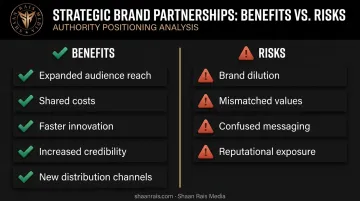
Research backs up the confusion risk. A three-country study across the US, UK, and Australia surveyed over 10,000 respondents across 54 brand pairs. Co-branded ads didn't significantly boost recognition, and actually reduced brand recall compared to single-brand ads.
Case in point: Target and Neiman Marcus. In 2012, the two launched a holiday collection featuring 24 designers, priced from $7.99 to $499.99. On paper, it looked like a perfect prestige-meets-mass-market pairing. In practice, it barely sold and required heavy discounting to move inventory. The lesson isn't that partnerships with prestige brands fail—it's that product-price fit matters more than partner pedigree.
That same principle applies beyond retail: weigh long-term brand equity against short-term partnership gains. A flashy co-brand that confuses your core audience isn't worth the initial buzz.
Real-World Co-Branding Examples
Seeing these strategies in action makes them easier to apply. Here are five that show the range of what co-branding can look like.
Nike + Apple: Fitness Meets Technology
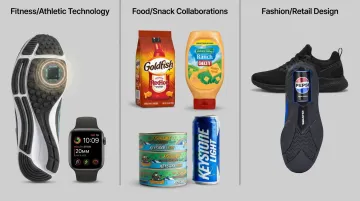
Announced in 2006, the Nike+iPod partnership merged a shoe sensor with an iPod nano receiver, tracking time, distance, pace, and calories. The kit sold for $29, with compatible shoes priced $80-$100. The partnership didn't stop there: it extended into the Apple Watch Nike+ a decade later in 2016. A well-matched co-brand can evolve rather than expire.
Taco Bell + Frito-Lay: Ingredient Co-Branding Done Right
The Doritos Locos Taco combined a fast-food format with a snack brand's signature flavor. After extensive testing, it launched nationally in March 2012. By December 2014, Taco Bell reported sales had surpassed 1 billion units sold. Few ingredient co-branding deals have paid off at this scale.
Financial Services: Co-Branded Travel Cards
Airline-bank partnerships, like American Airlines and Citi's AAdvantage card portfolio, show co-branding in a loyalty-driven B2C context. American Airlines reported $6.1 billion in 2024 cash remuneration from co-branded cards and other partners, up 17% year-over-year (though that figure includes a one-time payment tied to a new agreement).
Retail + Fashion: Designer Collaborations
Target's Missoni collection in 2011 offered more than 400 items priced $2.99-$599.99. Demand crashed Target's website, and products sold out within hours, later reappearing on eBay above retail price. Designer prestige paired with mass-market accessibility created real, if overwhelming, demand.
Tech + Lifestyle: IKEA and Sonos
The SYMFONISK line combined furniture and lighting design with app-controlled Sonos audio, launching in 2019 with bookshelf speakers and a table lamp, followed by a floor-lamp speaker in 2023. Furniture and audio aren't natural partners on paper. This pairing found a real product fit anyway, proving co-branding works beyond obvious category overlaps.
Best Practices for Building a Winning Co-Branding Strategy
Before pursuing any partnership, get clear on your own positioning first. A co-brand can only amplify what already has a defined identity. It can't fix a fuzzy one.
The same principle applies whether you're positioning a person or a company: partnering before you have a defined market perception means absorbing someone else's identity instead of strengthening your own. If your positioning is vague, a partnership won't sharpen it. It will simply hand the market someone else's clarity to associate with your name.
Evaluate Partner Compatibility First
Run a simple overlap assessment before committing:
- Shared audience: Do both brands reach similar or complementary customers?
- Aligned values: Would either brand's reputation embarrass the other if things went wrong?
- Complementary strengths: Does the partner fill a gap you don't have, rather than compete with what you already do?
Set Clear Objectives and KPIs Upfront
Both partners need to agree on what success looks like before launch, not after:
- Brand awareness lift
- Engagement rates
- Sales conversion
- Return on investment
Track these against pre-set benchmarks so success isn't a matter of opinion later.
Lock Down the Legal and Creative Framework
A unified brand message and visual guidelines prevent the confusion that undermines co-branded campaigns. Pair that with a legal agreement that spells out:
- Roles and responsibilities for each partner
- Trademark and IP usage rights
- Quality control standards
- Exit terms if the partnership ends
Skipping this step is how partnerships turn into disputes six months in.
Frequently Asked Questions
What is a co-branding strategy?
Co-branding is a strategic alliance where two or more brands combine their identities to create a shared product, service, or campaign. It leverages each partner's market strength and audience trust to produce something neither could build alone.
What are the 4 brand strategies?
The four recognized co-branding strategies are market penetration, global branding, brand reinforcement, and brand extension. Each serves a different goal, from protecting existing equity to entering new markets.
How is co-branding different from co-marketing?
Co-branding creates a new joint offering carrying both brand names. Co-marketing simply promotes existing, separate offerings jointly, without merging the products themselves.
What makes a co-branding partnership fail?
Most failures trace back to misaligned values, unclear roles, or messaging confusion between partners. Product-price mismatch, like the Target-Neiman Marcus collection, can also sink an otherwise well-matched partnership.
Can personal brands or solo experts use co-branding?
Yes. Experts and coaches can co-brand through joint programs or shared content. It only works once each person's own positioning is clearly defined; otherwise, one brand tends to absorb the other's identity.
How do you measure the success of a co-branding campaign?
Track KPIs like brand awareness lift, engagement, sales conversion, and ROI against benchmarks set before launch. Measuring each partner's individual recall matters too, not just overall campaign performance.