Here's the uncomfortable part. Many capable operators, founders, and experts invest heavily in skills, certifications, and coaching, yet still feel invisible in their market. They're good. They're just not seen — and being unseen has a price tag.
This guide covers what professional development support actually means, why it matters more than most people realize, the types available to you, and how to build a system that works whether you're an employee or running your own show.
Key Takeaways
- Professional development support is any resource, program, or relationship that builds career-relevant skills over time
- Employees consistently report they'd stay longer at companies that invest in their growth, per SHRM workforce research
- The strongest results come from combining formal training with mentorship, real application, and feedback
- Skill growth alone won't pay off without visibility and positioning to match
What Is Professional Development Support?
Professional development support is the combination of resources, guidance, and opportunities — financial, structural, or relational — that help someone grow their career-relevant capabilities over time. It's not one thing. It's an ecosystem.
The Association for Talent Development draws a clean line between two terms people often use interchangeably: training and development. Training is a formal, single-instance process aimed at improving current job performance. Development is broader — it's the acquisition of knowledge, skills, or attitudes that prepare someone for new directions or responsibilities entirely.
In plain terms:
- Training = a workshop on a new CRM tool
- Development = a multi-year plan to move from individual contributor to executive
One is an event. The other is a process tied to real goals — and that process draws on two distinct kinds of support.
Types of Support: Formal vs. Informal
Support generally falls into two buckets, and the best professionals use both.
Formal support looks like:
- Tuition reimbursement programs
- Industry certifications and credentialing
- Structured leadership programs
- Company-sponsored courses
Informal support looks like:
- Mentorship relationships
- Peer accountability groups
- Stretch assignments outside your job description
- Ad hoc feedback from someone more experienced
Formal support builds credentials, while informal support builds judgment — and career growth depends on both.
Who Provides Professional Development Support
Support can come from several directions — employers, professional associations, peer networks, hired coaches or consultants, or entirely self-directed effort. For salaried employees, a lot of this gets built into the job. Managers run development conversations. HR budgets for training. There's a system already in place, even if it's underused.
Independent operators, founders, and consultants don't get that luxury. There's no HR department building your development plan, no manager scheduling your quarterly check-in. You have to build the entire support system yourself. This is where most solo professionals fall short: They'll pay for a certification but skip the mentor. They'll join a mastermind but never revisit their goals. The system has to be assembled on purpose, not assumed — which is often the gap that coaching and positioning support are built to close.
Why Professional Development Support Matters
The business case isn't soft. It shows up in retention, profitability, and engagement numbers that are hard to ignore.
On retention specifically, LinkedIn's Workplace Learning Report found that 94% of employees would stay at a company longer if it invested in their career development. That's stated intent from a survey of roughly 4,000 professionals, not measured tenure, but it's a signal leaders can't ignore.
The organizational payoff backs it up:
| Metric | Finding |
|---|---|
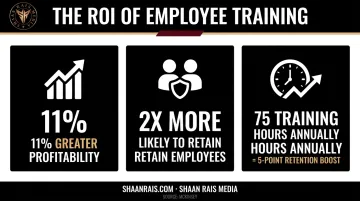
| Profitability | Companies with strategic development investment report 11% greater profitability |
| Retention likelihood | These same companies are 2x as likely to retain employees |
| Learning intensity benchmark | Best-in-class learning organizations deliver roughly 75 training hours per employee annually, with retention 5 points higher than peers (McKinsey) |
The cost of getting it wrong is just as concrete. Gallup estimates replacement costs run about 200% of salary for leaders and managers, 80% for technical professionals, and 40% for frontline employees. Notably, 42% of employees who voluntarily leave say their departure could have been prevented, often by better development or growth conversations.
For individual professionals, the pattern is direct: those who continually develop are better positioned for promotions, higher rates, and new opportunities as their market shifts. Skills alone rarely open those doors — visibility and positioning do the work of converting capability into recognized value.
Types of Professional Development Support You Can Access or Offer
Not all support looks the same, and mixing formats matters more than picking the "best" one.
Continuing education. Degree programs, certifications, and credentialing build recognized, portable expertise. These matter most when your field has a clear credential hierarchy, such as CPA, PMP, or industry-specific licensing.
Credentials build the foundation, but they rarely teach the interpersonal side of the job. That's where mentorship and coaching come in. Pairing with someone more experienced gets you feedback and accountability you can't generate alone. Coaching shows particularly strong results for interpersonal skills: leadership, communication, difficult conversations. A meta-analysis of 20 randomized controlled trials found executive coaching produced meaningful behavioral improvement (Hedges' g = 0.73 for behavioral outcomes specifically). Mentoring's evidence is softer and mostly correlational, but it still moves the needle on job satisfaction and career attachment.
Beyond one-on-one relationships, conferences, workshops, and industry events combine concentrated learning with networking you can't replicate online. Costs add up fast — major industry conferences often run $2,000 to $3,000 per person for in-person registration alone, before travel. Track two things afterward: specific skills gained and specific relationships built. If you can't name either, the event didn't pay off.
Job assignments and stretch projects. Learning by doing, often under real pressure. Roughly 75% of organizations use experiential learning for leadership development, and high-performing firms are about 3x more likely to lean on it than lower performers.
Peer groups and communities. Study groups, mastermind-style accountability circles, and internal mentoring create shared learning that formal programs miss entirely.
None of the above works without dedicated time and financial support behind it. Employer-provided learning time or tuition assistance covers employees; self-allocated budget and calendar blocks cover solo professionals. Either way, if there's no time or money attached, the "plan" is just a wish list.
How to Build a Professional Development Support Plan
A plan without structure is a New Year's resolution. Here's how to build one that actually holds up.
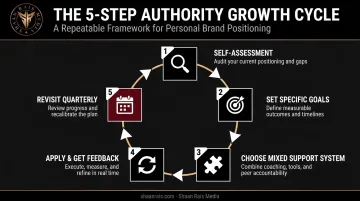
Run a self-assessment. Identify current strengths, skill gaps, and career goals using 360 feedback, self-assessment tools, or a trusted mentor's honest input. Skip this step and you'll waste money on the wrong resources.
Set specific, time-bound goals. "Get better at leadership" isn't a goal. "Lead a cross-functional project by Q3" is. Tie every goal to a 90-day window and a real outcome.
Choose a mixed support system. Pair at least one formal resource (a course, a certification) with one relational resource (a mentor, coach, or peer group). Formal builds knowledge. Relational builds accountability.
Build in real application and feedback. New skills that stay theoretical don't count. Apply them on a live project, then get feedback on execution — not just intention.
Revisit quarterly. Employees with quarterly progress checks are 90% more likely to be engaged, according to Gallup. Annual-only reviews, still the norm for 56% of employees, leave too much time for goals to go stale.
The Missing Piece: Why Skill-Building Alone Isn't Enough
Here's what most professional development advice misses: capability and visibility are two entirely different variables.
You can spend five years mastering your craft and still get passed over for opportunities that go to someone louder, not better. This isn't a fairness argument. It's a market mechanics problem. The market doesn't reward the most skilled person in the room. It rewards the person whose skill is clearly perceived, categorized, and communicated.
Shaan Rais, an Industrial-Organizational Psychologist known for his work in personal branding and positioning, calls this Perception Engineering — the deliberate process of shaping how the market receives, categorizes, and prices a professional. His framing is direct: "You are more valuable than you are visible."
For operators, founders, and experts who've already done the hard work of skill-building, the gap usually isn't ability. It's positioning. Rais built his 120-Day Personal Brand Legacy Protocol to address this gap directly. The program focuses on three things:
- Converting existing expertise into a clearly communicated market position
- Building recognized authority within a specific niche or industry
- Translating that authority into premium pricing power
The takeaway for anyone deep into skill-building: keep developing, but treat positioning as a parallel track rather than an afterthought. Skill-building determines your ceiling. Positioning determines who ever finds out you've reached it.
Frequently Asked Questions
What does professional development mean?
Professional development is the ongoing process of building career-relevant skills, knowledge, and relationships to support long-term growth. It's continuous, not a single event, and typically tied to specific career goals.
How do you support professional development?
Combine formal training (courses, certifications) with mentorship or coaching, stretch assignments, and dedicated time or budget. The mix matters more than any single resource.
What is the difference between training and professional development?
Training is typically a one-time, formal event focused on improving current job performance. Development is a continuous, goal-driven process that prepares someone for entirely new responsibilities.
What are examples of professional development activities?
Certifications, mentorship relationships, industry conferences, stretch projects, and peer mastermind groups are all common examples. Most effective plans combine at least two or three types.
How often should professional development plans be reviewed?
At least annually, but quarterly is far better. Employees with quarterly check-ins are more likely to stay engaged and view their goals as realistic.
Why does positioning matter alongside skill development?
Without visibility, even highly developed skills can go unnoticed in a crowded market. Positioning ensures your expertise is recognized and priced accordingly, rather than overlooked in favor of louder competitors.