Yet most companies still pour their training budgets into technical certifications while soft skills development gets a single afternoon workshop, if that. It's a strange gap given what's at stake: 92% of talent professionals say soft skills matter as much as or more than hard skills, according to LinkedIn's Global Talent Trends survey of over 5,000 professionals across 35 countries.
This guide breaks down what soft skills training actually is, the seven skills worth prioritizing, and how to build a program that changes behavior instead of just filling a compliance checkbox.
Key Takeaways
- Soft skills training is structured, ongoing practice — not a one-off workshop — that builds communication, empathy, and adaptability over time.
- 89% of employers say a failed new hire usually comes down to missing soft skills, not technical gaps, according to a LinkedIn Learning workplace skills report.
- The seven soft skills that matter most in 2026: communication, emotional intelligence, adaptability, critical thinking, collaboration, leadership, and time management.
- Effective training pairs instructor-led sessions with real practice — role-playing, coaching — rather than relying on e-learning alone.
What Is Soft Skills Training?
Soft skills training is structured development, delivered through workshops, coaching, role-play, and e-learning, aimed at strengthening the interpersonal behaviors that shape how someone actually works with others. Think communication under pressure, empathy during conflict, or adaptability when a plan falls apart.
Hard skills vs. soft skills comes down to how each one is learned and measured:
- Hard skills are procedural. You can certify someone in Excel or a coding language in weeks.
- Soft skills are behavioral. They require self-awareness, feedback, and repeated practice to shift.
There's a persistent myth that soft skills are fixed personality traits — that some people are "just naturally good communicators" and others aren't. That's false. Communication, emotional regulation, and adaptability can all be developed with the right structure and consistent feedback.
Why Lecture-Style Training Falls Short
Soft skills training works best as a blend:
- Instructor-led sessions to establish shared vocabulary and frameworks
- On-the-job coaching to reinforce behavior in real scenarios
- Simulated practice like role-play to build muscle memory before the stakes are real
A slide deck on "active listening" won't change how someone behaves in their next difficult conversation. Practice will.
Self-Awareness Comes First
People don't fix a gap they don't believe exists. That's the real starting point of soft skills growth: helping someone see their blind spot before you ask them to close it. Skip this step, and any training you run afterward is just theater.
Why Soft Skills Training Matters for Employees and Employers
As AI automates more routine technical tasks, distinctly human skills—empathy, judgment, and conflict resolution—are becoming more valuable. The data on this workplace shift is impossible to ignore.
Key industry reports highlight the trend:
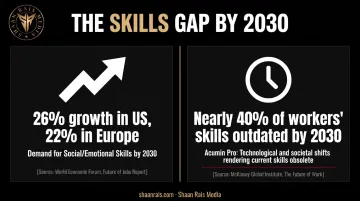
- Demand for social and emotional skills is projected to grow 26% in the US and 22% in Europe by 2030, outpacing growth in demand for higher-cognitive skills (McKinsey).
- Nearly 40% of workers' existing skills will be outdated by 2030, requiring a massive shift toward new capabilities (World Economic Forum).
Capability Isn't the Same as Recognition
Here's the part most companies miss: being skilled and being seen as skilled are two different things. An employee can develop exceptional communication and leadership ability and still get passed over for promotion, simply because nobody connected that growth to a visible opportunity.
This is where positioning enters the picture. Shaan Rais, who works with executives on this exact problem, frames it plainly: capability without visibility gets overlooked. His practice helps skilled leaders translate their abilities into how decision-makers perceive them.
The lesson for internal training is direct. Building an employee's skills is only half the job; ensuring those new skills get recognized and connected to opportunities is the other, equally critical half.
The 7 Major Soft Skills Employees Need (With Examples)
These seven consistently show up across employer surveys and workforce research as the skills companies need most and struggle hardest to find.
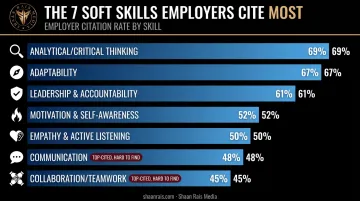
Here's how each skill ranks according to WEF's 2025 analysis of US job postings and LinkedIn's talent research:
| Skill | Employer Data | WEF/LinkedIn Rank |
|---|---|---|
| Communication | Most frequently mentioned human skill | Top-cited overall |
| Analytical/Critical Thinking | Cited by 69% of employers | 1st |
| Adaptability | Cited by 67% of employers | 2nd |
| Leadership & Accountability | Cited by 61% of employers | 3rd |
| Collaboration & Teamwork | Struggle-to-find skill | 3rd (LinkedIn) |
| Motivation & Self-Awareness | Cited by 52% of employers | 5th |
| Time Management | Struggle-to-find skill | 5th (LinkedIn) |
| Empathy & Active Listening | Cited by 50% of employers | 7th |
Communication Skills
Example: An employee delivers a clear, concise presentation that persuades senior leadership to fund a new initiative. Written and verbal communication shape how colleagues perceive competence, often more than the actual output does.
Emotional Intelligence (EQ)
Example: A manager notices rising tension between two team members and uses active listening, not lecturing, to de-escalate the conflict before it affects the whole team.
Adaptability
Example: A project's scope changes two weeks before launch. An adaptable employee adjusts the plan without dropping quality or missing the deadline.
Critical Thinking / Problem-Solving
Example: An analyst spots an unusual pattern in quarterly data and flags a potential issue before it turns into a costly mistake.
Collaboration and Teamwork
Example: A cross-functional team splits work according to individual strengths and finishes the project ahead of schedule.
Leadership and Accountability
Example: A team lead misses a deadline, owns the mistake openly, explains what went wrong, and presents a revised plan instead of deflecting blame.
Time Management
Example: A project manager uses structured sprints to deliver a launch a full week ahead of schedule.
The hardest skills to build: self-awareness, active listening, and conflict resolution consistently top the list. They demand honesty about personal blind spots, not just repetition.
How to Build an Effective Soft Skills Training Program
Building a program that actually sticks requires more than scheduling a workshop. Research on training design points to specific structural choices that separate programs that change behavior from ones that don't.
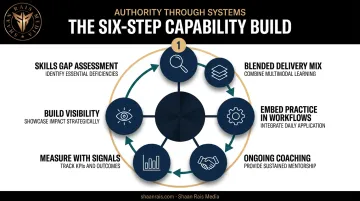
Run a skills gap assessment first. Use behavioral interviews, manager feedback, and 360-degree reviews to identify which soft skills are weakest across teams. Skipping this step means training the wrong things.
Choose a blended delivery mix. Pair instructor-led workshops (to build shared vocabulary) with scenario-based practice like role-play and simulations. A meta-analysis of 335 leadership training samples found the most effective programs use spaced sessions, multiple delivery methods, and face-to-face practice, not one-off lectures.
Embed practice into existing workflows. Add feedback exercises into 1:1s and project retrospectives instead of treating soft skills as a separate initiative competing for time.
Make coaching ongoing, not occasional. A meta-analysis on behavior-modeling training found that transfer to actual job behavior improves with repeated practice, trainee-generated scenarios, and manager involvement, not a single session.
Measure with both qualitative and quantitative signals. Combine peer reviews and manager observations with team-level metrics like retention, collaboration quality, and internal promotion rates.
Build visibility into the process. Once an employee improves their communication or leadership presence, managers need to actively recognize that growth rather than assume it gets noticed.
Skill development that goes unseen rarely translates into career movement. Building capability is only half the equation; someone has to register that the growth happened.
Common Challenges in Soft Skills Training (and How to Avoid Them)
Even well-designed programs hit the same friction points. Here's where they typically break down:
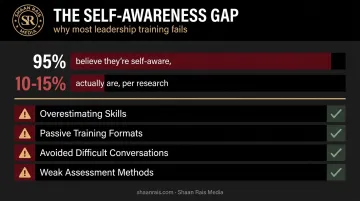
Employees overestimate their own soft skills. In a nearly five-year Harvard Business Review study spanning 10 investigations and almost 5,000 participants, 95% of people believed they were self-aware, but only 10-15% actually met the study's criteria. Fix: run honest 360 feedback before training starts, not after.
Passive formats don't create lasting change. One-off workshops and standalone e-learning modules rarely shift behavior on their own — they need repeated, real-world practice to stick.
Managers avoid the uncomfortable conversation. Soft skill gaps are harder to name than a missed technical spec. Fix: build low-stakes, structured feedback moments into regular team culture so issues surface early instead of festering.
Assessment itself is a weak spot. Only 41% of companies have a formal process for assessing soft skills, while 57% say they struggle to assess them accurately, per LinkedIn's talent research.
Frequently Asked Questions
What is soft skills training?
Soft skills training is structured development of non-technical, interpersonal behaviors like communication, emotional intelligence, and adaptability. It's delivered through workshops, coaching, and hands-on practice rather than one-time lectures.
What are examples of soft skills training?
Common examples include role-playing customer conflict scenarios, communication workshops, active listening exercises, structured mentoring programs, and e-learning modules focused on emotional intelligence.
What are the 7 major soft skills?
Communication, emotional intelligence, adaptability, critical thinking, collaboration, leadership and accountability, and time management. These consistently rank as the skills employers need most and struggle to find.
Can soft skills actually be trained, or are they innate?
Soft skills are trainable through deliberate practice, feedback, and self-awareness work. They're not fixed personality traits, though they do require more repetition to shift than technical skills.
How long does it take to see results from soft skills training?
Meaningful behavioral change typically takes weeks to months of consistent, low-stakes practice. A single workshop rarely produces lasting change on its own.
What's the difference between soft skills training and hard skills training?
Hard skills are procedural and technical, and can often be certified quickly. Soft skills are behavioral, harder to measure, and require ongoing practice and feedback to actually change.